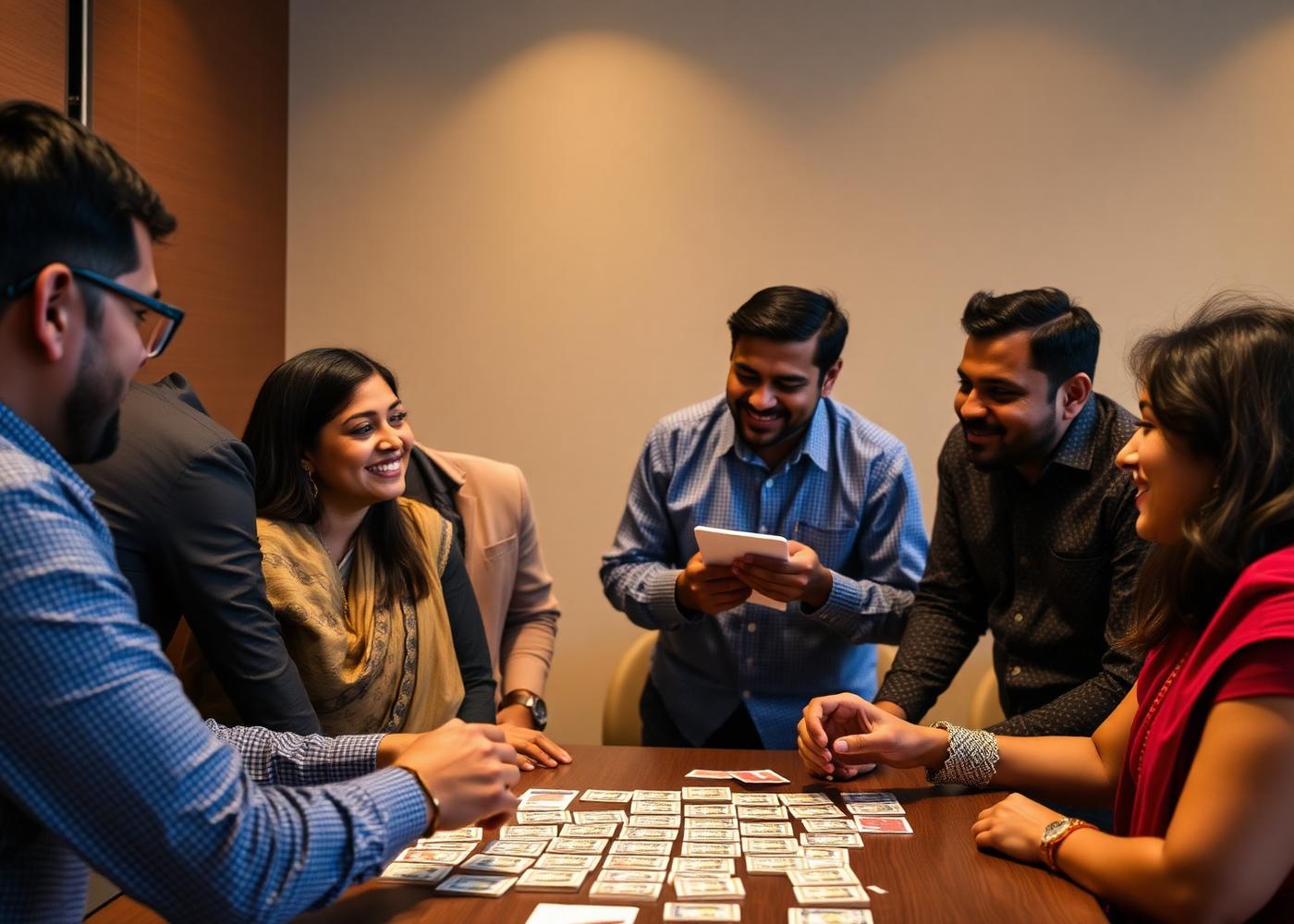
Financial Chakravyuh is a transformative board game experience designed to rewire how you think, talk, and act with money — through play, real stories, and peer accountability.
What is Financial Chakravyuh?
Inspired by the ancient military formation, Financial Chakravyuh traps players inside a spiral of financial decisions — and challenges them to find the way out using smart money moves.
Players face 60+ cards based on actual Indian middle-class money decisions — from buying on EMI to chasing hot tips on the stock market.
No boring presentations. The game creates natural conversations about money in a safe, judgment-free environment with your own circle.
Every session ends with a personal financial action plan. Real goals, real deadlines, real accountability — not just awareness.
Compete to build the strongest financial portfolio while learning from each other's choices. Wins and losses both teach.
Why Play Financial Chakravyuh?
Discover your own money patterns, biases, and blind spots through gameplay — without a single spreadsheet or lecture.
Indian families rarely discuss money openly. This game makes those conversations natural, easy, and even fun.
Learn to distinguish between productive risk (equity SIPs) and destructive risk (chit funds, speculation) through simulated experience.
Walk away with 3 clear financial goals and the first action step to achieve each one — before the end of the session.
Playing with friends or colleagues creates natural accountability partners who will check in on your financial commitments.
SIPs, term insurance, PPF, ELSS — learn what these really mean and why they matter, through game mechanics not textbooks.
When a family plays together, they align on money values, spending priorities, and savings goals for the first time.
"Real estate is always best." "Gold is safe." "Insurance is a waste." The game systematically busts harmful myths with data.
Understand diversification not as a concept but as a felt experience — when your single-asset strategy crashes in Round 3.
Feel the compounding effect viscerally when you see players who started investing early build 3× more wealth by game end.
Understand why term insurance and emergency funds are the non-negotiable foundation — not optional extras for "rich people."
Shift from short-term gratification to legacy building. Players routinely report a fundamental shift in how they view their income.
Lasting Change
One game session creates the emotional anchor. The habits follow naturally because they feel chosen, not imposed.
Automatically saving before spending — not the other way around. The game makes this the winning strategy every single round.
Allocating income into needs, wants, and savings/investments becomes second nature after experiencing what happens without it.
Term insurance and health cover before any "wealth" product. The game scenario where an uninsured player loses everything is unforgettable.
Regular investing without trying to time the market. Players who do this in the game outperform every time. Every single time.
Building 6 months of expenses as a buffer before starting wealth creation — experienced viscerally when a crisis card strikes.
Recognizing the difference between income upgrades and expense upgrades. The "Raise Card" in the game creates this exact dilemma.
Reviewing goals, portfolio, and insurance cover every year — not just when a crisis forces you to. Built into every game round.
Using ELSS, PPF, and NPS before chasing returns. The game's tax cards show players exactly how much they're leaving on the table.
For Every Money Mindset
Every person enters the game with a different relationship with money. The Chakravyuh meets them exactly where they are.
The Avoider
"I don't want to think about money — it stresses me out." They ignore finances, delay decisions, and have no idea where their salary goes.
Leaves with clarity, a safety net plan, and zero shame about starting late
The Gambler
Loves F&O, hot tips, and quick gains. Hates the idea of "boring" SIPs and long-term investing. Takes outsized risks without understanding them.
Experiences the downside of speculation in the game — and finally "gets it" without real money loss
The Spender
Income grows but savings don't. Every raise becomes a better car, bigger apartment, or more dining out. No emergency fund, no insurance.
Visually sees the gap between current trajectory and desired retirement — massive mindset shift
The Skeptic
"All financial products are a scam." Has been mis-sold insurance or lost money in markets. Deeply skeptical of any advisor or product.
Learns to evaluate products objectively using simple criteria — becomes a smarter buyer, not a non-buyer
The Overplanner
Has read everything, knows everything, but never acts. Always researching the "perfect" fund or "right time" to start investing.
Game forces imperfect decisions — and shows that starting beats perfecting every time
The Provider
Puts everyone's needs before their own. Spends on children, parents, and relatives while neglecting personal insurance and retirement savings.
Understands that protecting themselves IS protecting the family — buys term insurance within 30 days
Maximum Impact
The Financial Chakravyuh is designed to be played multiple times with different groups — each one unlocks a different level of insight and accountability.
Break generational money silence. Parents and children discuss real financial values for the first time. Spouses align on savings goals without arguments. Creates a shared family financial vision.
Office teams who talk about salaries but never about wealth. Creates a culture of financial wellness at work. Managers learn what stresses their teams. Team bonding with real impact.
Friends who spend together but never invest together. Creates peer accountability for financial goals. The group becomes your informal financial advisory board.
First paycheck receivers who have no financial framework. The game sets the right foundation before bad habits form. One session can change the entire financial trajectory of their lives.
SME owners who mix personal and business finances. Learn to separate the two, build personal wealth alongside business, and protect both with the right products.
Women who have delegated financial decisions to partners or fathers. Build financial confidence and independence. Increasingly, the primary financial decision-maker of their households.
Game Design
EMI traps, salary hike decisions, real estate FOMO, health emergencies, job loss — scenarios every Indian middle-class family actually faces.
Players can fall into a debt spiral — just like in real life — and must strategically work their way out. Experiential learning at its most powerful.
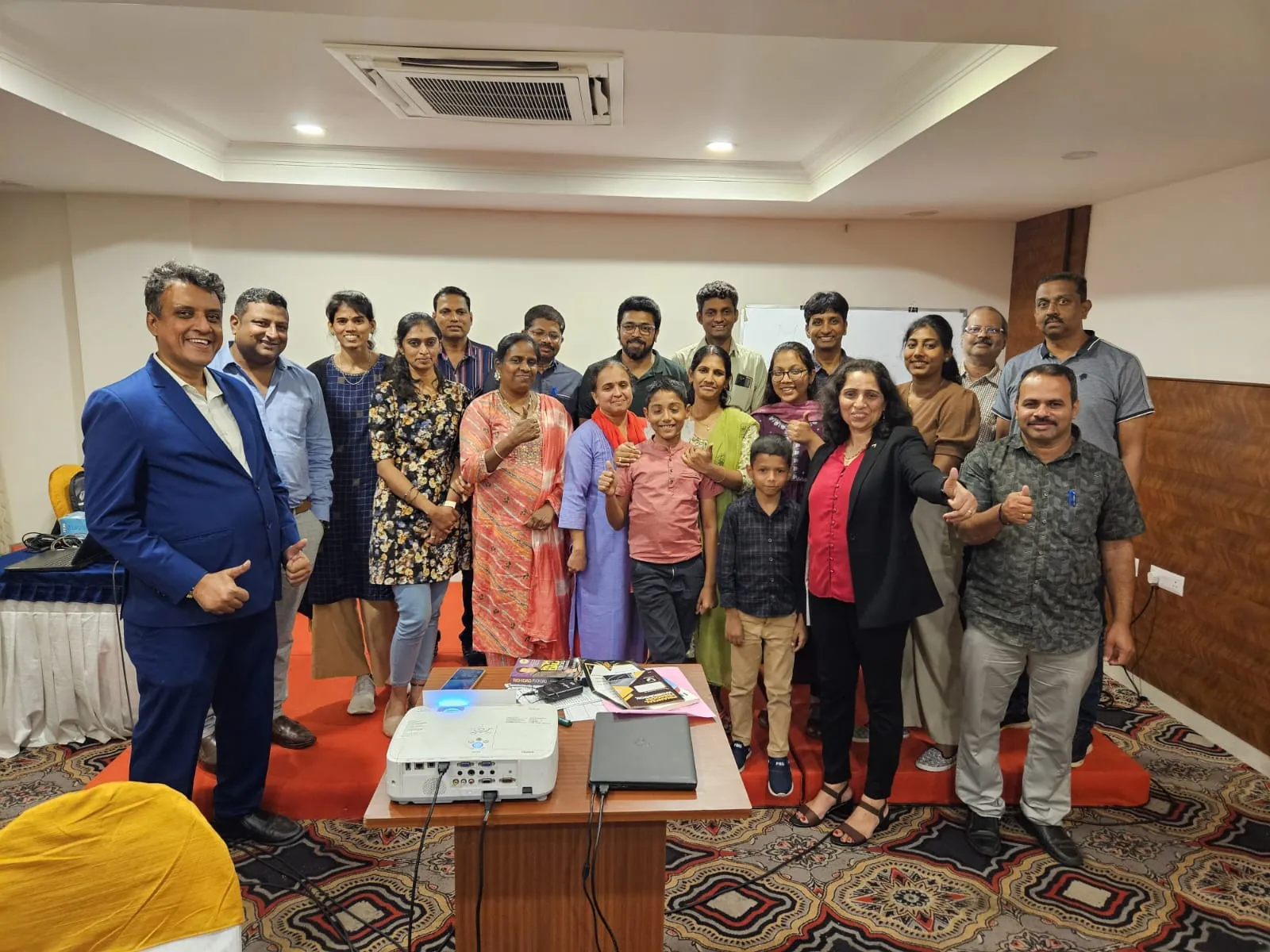
Every session is run by a Dhansphere-certified Financial Wellness Facilitator who customizes the debrief to your group's specific situation.
A physical track that shows wealth grow exponentially over the game's timeline — players see with their own eyes why starting early matters.
Every player receives a customized 90-day financial action plan based on their game performance and personal goals disclosed during play.
A dedicated game round where risk events strike unprotected players — the most memorable and action-triggering moment in any session.
Section 80C, 80D, and NPS cards that teach players exactly how to reduce tax liability while building wealth simultaneously.
In the final round, players discover if they've built enough corpus for retirement — and the emotional impact of this moment drives action like nothing else.
Go-To-Market Strategy
A structured rollout from community seeding to city-wide corporate dominance — designed for Dhansphere's existing network advantages.
01
Seed Phase — Months 1–2
02
Community Phase — Months 3–4
03
Scale Phase — Months 5–8
04
Dominate — Month 9+
Primary Segments
Salaried professionals ₹8L–₹30L CTC
Urban 28–45 age group
Mumbai, Pune, Bangalore, Hyderabad
Dual-income households
Distribution Channels
WhatsApp broadcast marketing
Instagram @11xpawan content funnel
Corporate HR departments
ZFunds IFA partner network
Revenue Model
₹500–₹1,500 per player / session
Corporate: ₹20,000–₹75,000 per session
Franchise license fee per city
Recurring follow-up advisory
Real Outcomes
I've attended 3 financial seminars and read 2 books. Nothing hit as hard as losing in the game. I started my first SIP the same evening.
Rahul Sharma
Software Engineer, Pune · Age 31
My husband and I were fighting about money for years. This game gave us a language to talk about it. We now have a joint financial plan for the first time.
Priya & Anand Mehta
Working Couple, Mumbai · Ages 34 & 36
We ran this for our 120-person team. The engagement was extraordinary. Every single person rated it the best L&D session we've done in 3 years.
Sunita Krishnan
VP-HR, IT Services Company, Bangalore
I'm 24 and never thought about insurance or retirement. After the game I bought term insurance within a week. My parents couldn't believe it.
Aakash Patel
Marketing Executive, Ahmedabad · Age 24
I've been an F&O trader for 5 years. The game showed me exactly why my net worth was going backwards despite a good salary. I've now shifted to mutual funds.
Nikhil Joshi
Operations Manager, Mumbai · Age 38
As a woman who always deferred financial decisions to my father and then my husband, this session was genuinely life-changing. I now manage my own portfolio.
Deepa Nair
Teacher turned Investor, Kochi · Age 42
Book a Session
Explorer
₹499 / per person
Perfect for friend groups and family sessions. Join an open batch with other players from across the city.
Private Circle
₹4,999 / per session
Your group, your schedule, your breakthroughs. Host a private session for up to 8 people at a venue of your choice.
Corporate
₹24,999 / per session
Transform your team's financial wellness. Designed for corporate L&D programs, HR wellness initiatives, and annual offsites.
🎓 Looking to become a Certified Chakravyuh Facilitator?
Join our IFA & advisor certification program and run paid sessions in your city. Learn about the Facilitator Program →
Join 5,000+ Indians who used a game to transform their financial lives. Your breakthrough is two hours away.
Book Your Session Now →